
Uncategorized
Hand-Washing vs. Using Hand Sanitizer

Sep
introduction
Keeping our hands clean is one of the simplest and most effective ways to stay healthy. Throughout the day, our hands touch many different surfaces — door handles, phones, money, or even other people’s hands. Germs and bacteria can quickly spread from these surfaces to our bodies, and if we’re not careful, they can cause illnesses. That’s why cleaning our hands regularly is so important. But here comes the common question: Is washing with soap and water better, or should we just use hand sanitizer?
In this article, we’ll explore the differences between the two methods, their advantages, and when to use each one.
Why Clean Hands Matter
Before diving into the comparison, let’s understand why hand hygiene is such a big deal. Germs like bacteria and viruses are often invisible to the eye. A quick touch of your face, nose, or mouth after handling dirty objects can make it easy for these germs to enter your body.
Regularly cleaning your hands lowers the risk of catching colds, flu, food poisoning, and even more serious infections. Both hand-washing and hand sanitizer play a role in keeping us safe, but they are not exactly the same.
Hand-Washing: The Traditional Method
How It Works
Hand-washing with soap and water physically removes dirt, grease, and germs from your skin. Soap molecules break down oils and lift germs off the hands, while running water washes them away.
Benefits of Hand-Washing
- Removes dirt and grime: Soap and water are effective at removing visible dirt that hand sanitizer cannot.
- Works against many germs: Hand-washing can kill or wash away many types of harmful microorganisms, including some that hand sanitizer may not remove.
- No chemical residue: Since you rinse your hands, there’s no sticky or strong smell left behind.
- Safe for frequent use: It can be used as often as needed without drying out the skin too much (if you use gentle soap).
Limitations
- Requires access to clean water and soap.
- Takes more time (about 20 seconds of scrubbing).
- Not always possible when you’re outdoors or traveling.
Hand Sanitizer: The Convenient Alternative
How It Works
Hand sanitizer, usually made with alcohol (at least 60% is recommended), kills many germs on contact. You simply rub it into your hands until dry, without needing water or towels.
Benefits of Hand Sanitizer
- Quick and easy: You can clean your hands in seconds, even without water.
- Portable: Bottles of hand sanitizer can be carried in your pocket, bag, or car.
- Effective against many germs: Alcohol-based hand sanitizer kills a large percentage of bacteria and viruses.
- Great for public places: Perfect for when you’re on the go, such as in shops, public transport, or after touching shared surfaces.
Limitations
- Not effective on dirty or greasy hands: If your hands are visibly soiled, sanitizer won’t work as well.
- Doesn’t kill all germs: Some germs, like certain viruses or spores, may resist alcohol-based sanitizers.
- Can dry the skin: Frequent use of hand sanitizer may leave your hands dry or irritated.
- Risk of improper use: Using too little sanitizer or not rubbing it long enough reduces its effectiveness.
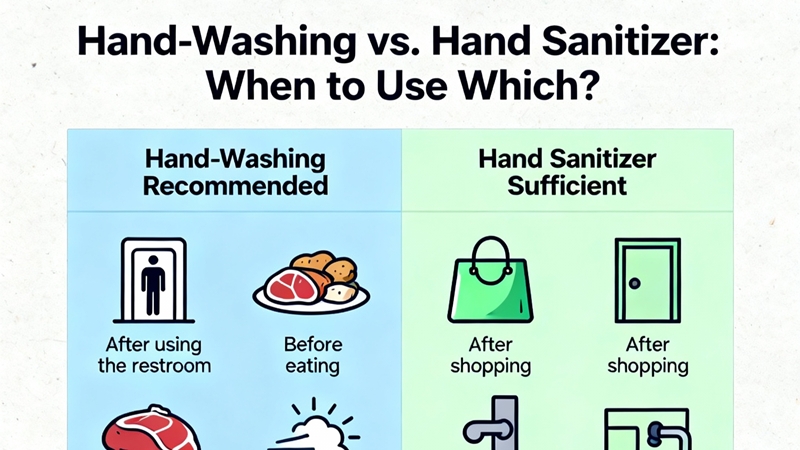
Hand-Washing vs. Hand Sanitizer: When to Use Each
The truth is, both methods have their place. Neither is always “better” than the other—it depends on the situation.
Best Times to Wash with Soap and Water
- After using the toilet
- Before eating or cooking
- When your hands are visibly dirty or greasy
- After handling raw meat, fish, or poultry
- After gardening or outdoor activities
Best Times to Use Hand Sanitizer
- When soap and water aren’t available
- After touching public surfaces (elevator buttons, bus handles, shopping carts)
- Before and after meeting people in public places
- While traveling or at events where sinks aren’t nearby
Can You Use Both Together?
Yes! In fact, using both methods when needed gives you the best protection. For example, you can wash your hands before preparing food at home, but carry hand sanitizer when you’re outside and don’t have access to a sink.
Think of hand-washing as the gold standard and hand sanitizer as a helpful backup.
Tips for Effective Hand Hygiene
- Wash your hands with soap and water for at least 20 seconds. Don’t forget the backs of your hands, between fingers, and under nails.
- Use a hand sanitizer with at least 60% alcohol for best results.
- Apply enough sanitizer to cover your whole hand and rub until your hands are completely dry.
- Moisturize your hands if they feel dry to prevent cracks that could let germs in.
Conclusion
Both hand-washing and using hand sanitizer are essential tools for keeping your hands clean and protecting yourself from illnesses.
- Hand-washing is the most reliable method when your hands are dirty or greasy and should always be your first choice whenever possible.
- Hand sanitizer is a convenient and effective option when you’re on the go and can’t access soap and water.
The key takeaway? Don’t think of it as hand-washing versus hand sanitizer. Instead, think of them as partners in your daily hygiene routine. Use soap and water whenever you can, and keep a bottle of hand sanitizer with you for all the times when washing isn’t possible.
You can easily find more of our blogs on Sanixway blog section!
